Why the West Harris County Regional Water Authority Was Necessary
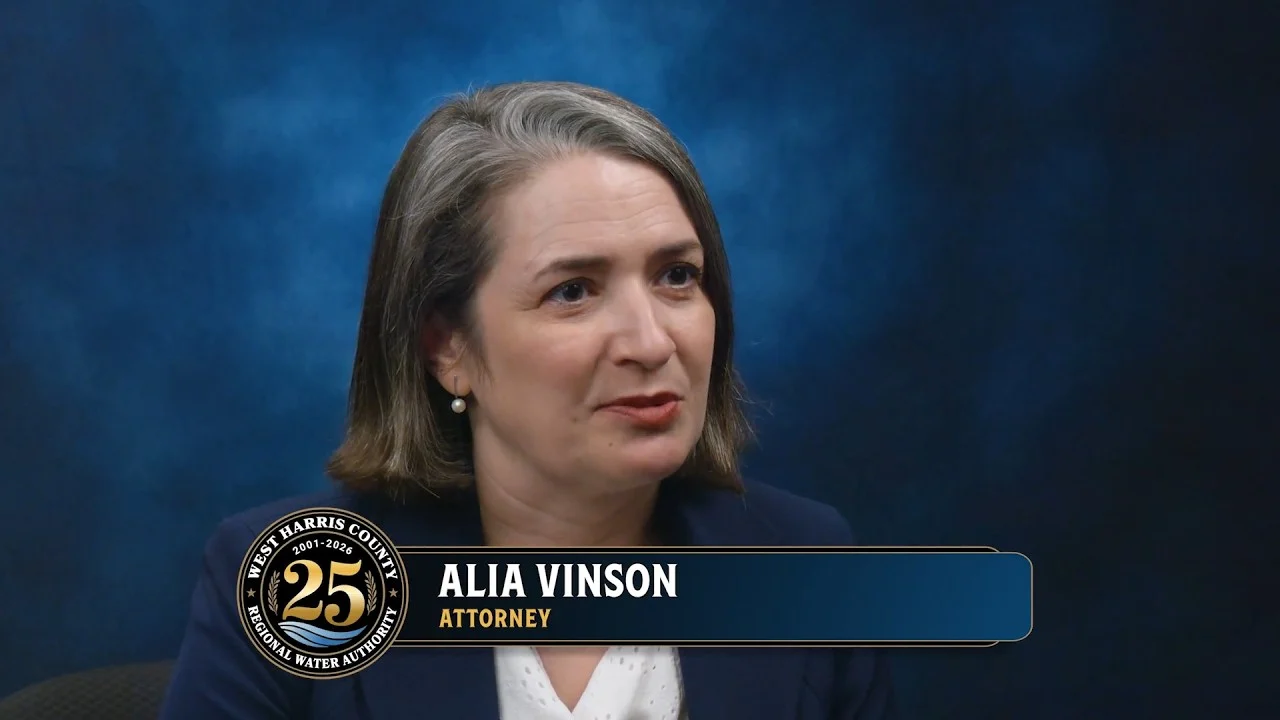
When the conversion from groundwater to surface water was required, individual MUDs did not have the ability to secure the necessary water supply on their own. Alia Vinson explains why the Authority was needed to bring the MUDs together, negotiate with the City of Houston, and finance a long-term surface water supply.
Transcript
Transcript edited for clarity and readability.
When the Harris-Galveston Subsidence District created Area 3 in north and northwest Harris County, requiring the conversion from groundwater to surface water, there was a real problem with what was going on at the time.
Area 3 was largely outside of the City of Houston boundaries. If you take what are now the boundaries of the West, you had numerous MUDs in place, but their water supply was groundwater wells that they were treating on site and then distributing to their own customers.
When the Subsidence District mandated a change from groundwater to surface water, those MUDs, individually, were not in a position to access surface water or contract to obtain it.
That was chiefly because the City of Houston has almost all of the surface water rights in the Trinity River and the San Jacinto River that the areas within West Harris County would need to access.
It took a larger entity, created by the state in 2001, for those entities to group together and have the negotiating power and financing ability to go to the City of Houston and negotiate a long-term, multi-decade contract through 2080 and beyond.
The West Harris County Regional Water Authority was a necessary part of complying with the Subsidence District requirements. Without it, the MUDs in West Harris County would not have been able to obtain surface water from the City of Houston and would have been unable to comply with the Subsidence District requirements.
Watch more from The People Behind the Progress Video Series:
https://www.whcrwa.com/people-behind-the-progress/