
Saving money is on all our minds these days. Fortunately, a healthy, attractive lawn doesn’t have to mean spending more on water, fertilizer, and landscaping supplies.
A few simple changes to how you mow, care for your soil, and select plants can make a noticeable difference. And some of the best lawn care practices don’t cost anything at all!
Don’t Cut Your Grass Too Short
Giving your lawn a close shave might seem like a good way to mow less often, but cutting grass too short can actually make it harder to maintain.
Taller grass blades help shade the soil, reduce moisture loss, and support healthy root growth. Grass that’s repeatedly cut too short can become stressed, especially during Southeast Texas summers.
The proper mowing height depends on your grass variety. St. Augustine, Bermuda, and Zoysia grasses have different needs, so be sure you’re mowing at the appropriate height.
Keep mower blades sharp, and avoid removing more than one-third of the grass blade during a single mowing.
Keep It Natural!
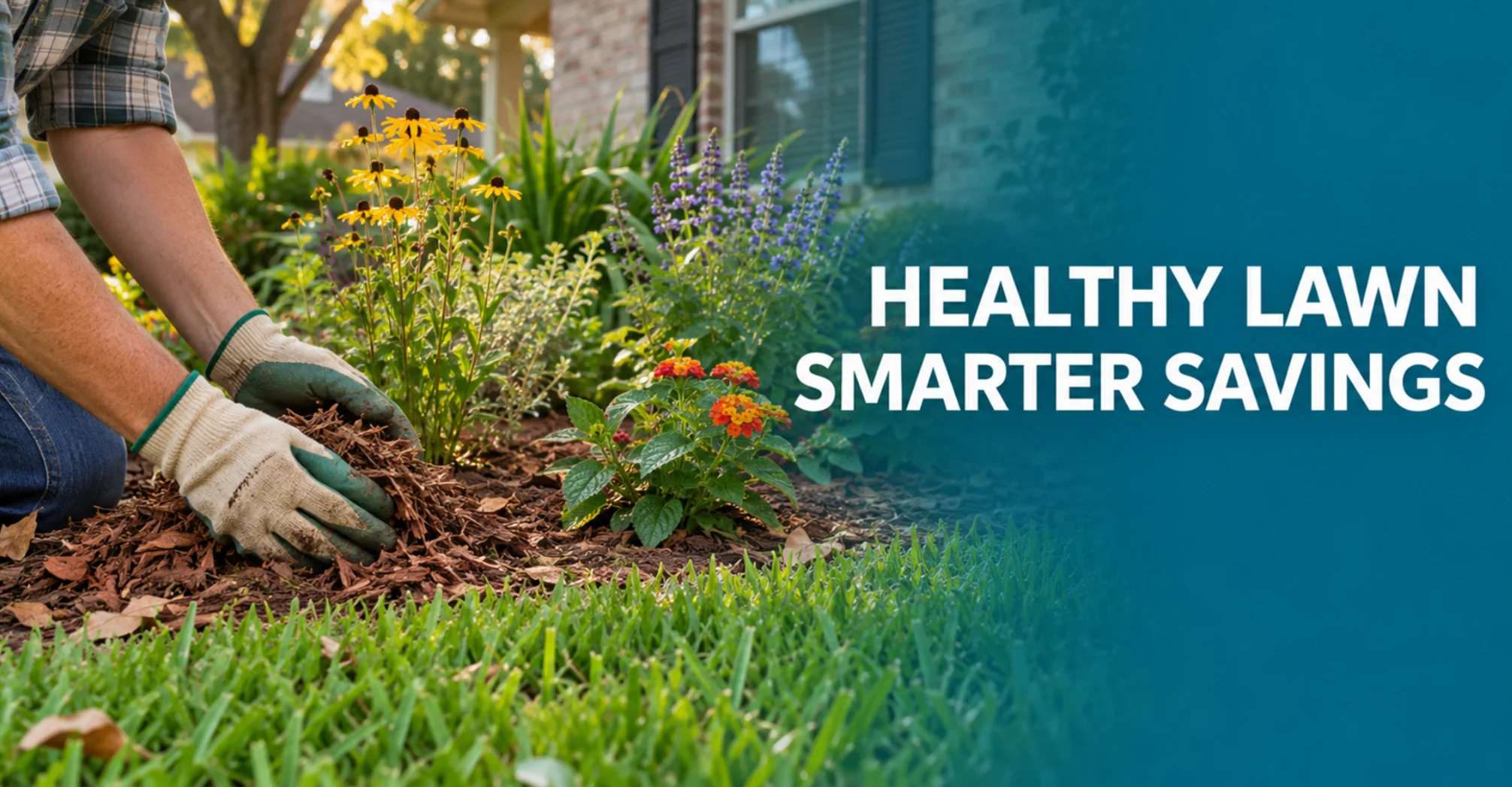
Mulch is one of the simplest ways to help your landscape retain moisture.
Organic mulches such as shredded leaves, pine needles, bark, and compost help protect the soil from direct sunlight, moderate soil temperatures, and discourage weeds.
As these materials break down, they also contribute organic matter to the soil.
And here’s another money-saving tip: Leave those grass clippings where they fall!
When clippings are small and spread evenly across the lawn, they break down naturally and return nutrients to the soil. That means less bagging, less yard waste, and potentially less fertilizer.
Just be sure clippings aren’t left in thick piles that could smother the grass.
Investigate Your Lawn’s DNA
Before spending money on fertilizer, wouldn’t it be nice to know what your soil actually needs?
A soil test can help take the guesswork out of lawn care.
The Texas A&M AgriLife Extension Soil Testing Laboratory analyzes soil samples and provides information that can help homeowners make better decisions about fertilization.
Applying fertilizer without knowing your soil’s needs can waste money. Excess nutrients can also wash away during heavy rainfall or irrigation.
A little information upfront may save you money and help keep unnecessary chemicals out of our waterways.
Learn more about soil testing through Texas A&M AgriLife Extension.
A Total, Annual Makeover Isn’t Necessary
Who says you have to start over every spring?
Choosing hardy perennials and plants suited to Southeast Texas can reduce the expense and effort of replacing seasonal flowers year after year.
Native plants are particularly worth considering. Many are well adapted to our regional climate and, once established in suitable growing conditions, can require less supplemental watering and maintenance.
WHCRWA has an extensive Native Plants for Houston Home Landscapes resource to help you explore options.
You can also find practical planting and landscaping ideas in our Water-Wise Landscapes for Southeast Texas article.
A Healthy Lawn Doesn’t Have to Be Expensive
Sometimes the best improvements are the simplest ones: mow at the right height, reuse grass clippings, protect your soil with mulch, and choose plants that belong in our climate.
Combine those habits with the watering practices in Water Your Lawn Smarter… and Save Money!, and you’ll be giving your landscape a better chance to thrive without unnecessary expense.
Originally written by Barbara Payne. Updated November 2026.

Learn About Your Water!
Practical Information, conservation tips, and educational resources.